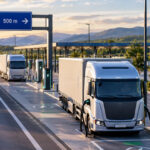
China is reshaping global freight with rail corridors that rival maritime shipping in speed and reliability. At the heart of this shift is Chongqing, now a strategic hub branded as the “Suez Canal on rails.” The ASEAN Express, launched in late 2024, reached full bidirectional capacity in 2025, connecting Duisburg with Southeast Asia and slashing delivery times to just 19 days — over 50% faster than sea routes. Streamlined customs and standardized container systems further reinforce its efficiency.
The timing is significant. Since late 2023, instability in the Red Sea has undermined the reliability of the Suez Canal. Attacks on shipping, costly detours around Africa, rising war-risk insurance, and congested European ports have collectively disrupted maritime supply chains. Against this backdrop, rail freight has become an attractive solution for high-value and time-sensitive cargo. New “ultra express” routes, including the Middle Corridor through Kazakhstan and Turkey, have pushed delivery times down by another 10 days, further strengthening the rail network’s competitive edge.
For Europe, this transformation carries both challenges and opportunities. Inland terminals in Duisburg, Warsaw, and Budapest are emerging as vital logistics nodes, feeding last-mile and cross-border trucking demand while gradually reducing dependency on traditional seaports. As Chongqing consolidates its logistics role, China’s Belt and Road Initiative gains greater resilience and control over supply chains, potentially redefining Eurasian trade flows for the next decade.
Stay up-to-date with our latest news – > REGISTER HERE
 15
15